

Rewiring the Egg Supply Chain in Austria – Agriculture and rural development Skip to main content
Austria’s conventional egg sector previously relied on a fragmented supply chain using imported soya, with no sector-wide commitment to certified, non-GM and deforestation-free European feed. The country has quietly achieved something most countries find difficult: a full-scale transformation of a mainstream food supply chain using nothing more sophisticated than feed labels, retailer coordination, and some policy alignment.
Keeping it simple
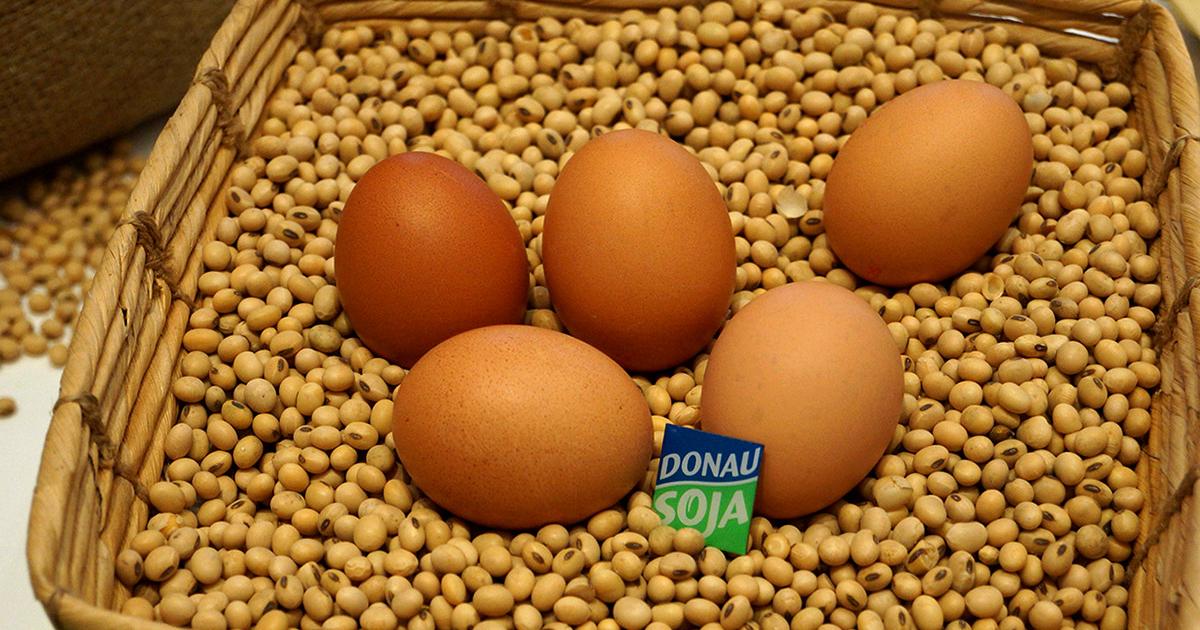
At the heart of it is a straightforward idea with far-reaching consequences: if you change what hens eat, you change the environmental footprint of the egg itself. In 2013, the aim was not superficial branding, but structural change. Instead of relying on imported soya, which is often linked to deforestation and long supply chains, the Austrian retail sector aligned itself with GMO-free soya grown within Europe, particularly the Danube basin region. They also have the logo to be used on egg packaging offering reassurance to the consumer.
The project shows what a full-sector transition looks like in practice. It shows how to align farmers, industry, and retail around one shared standard and product label. It also shows what becomes possible when European soya replaces imports
General Manager Aurélie Tournan
It did not start with the sector as a whole. It started with public opinion and consumer expectations, a few early movers, and clear long-term retailer commitments. This created momentum and certainty and helped the market reach a tipping point. Donau Soja, as a non-profit and multi-stakeholder organisation, helped translate these expectations into a coordinated process.
General Manager Aurélie Tournan
Including the whole sector
These changes were combined with coordinated action across the whole value chain: retailers, feed producers, farmers, and certification bodies all moving in sync. Major supermarket chains effectively created a market guarantee for Europe Soya-certified feed, which gave farmers the confidence to make the change.
Today, virtually all conventional retail eggs sold in Austria come from hens fed on GMO-free European soy under the Europe Soya standard. The system has become embedded rather than optional. It’s not so much a niche label as it is an industry default.
A broad range of positive results
Austria’s transition to European soya shows that large-scale change in agricultural supply chains is both practical and commercially viable. Based on a study by BOKU University, it is estimated that, by making the change, Austrian egg producers have reduced greenhouse gas emissions by around 40% compared with the EU average while supporting healthier soils through nitrogen-fixing soya, which reduces the need for synthetic fertilisers and encourages more diverse crop rotation.
The benefits extend well beyond climate. Sourcing soya from Europe reduces dependence on imports from countries where production is associated with deforestation, while strengthening Europe’s own supply chains and economic added value. Austria has now reached around 40% soya self-sufficiency, well above the EU average of 6%, demonstrating how domestic protein production can improve resilience and reduce reliance on global markets.
And the commercial gains
The initiative also delivers commercial advantages. A credible, science-based sustainability story has strengthened consumer confidence and enhanced the competitiveness of Austrian eggs in domestic and export markets. Underpinning the transition is a comprehensive Product Carbon Footprint study by BOKU University, providing a robust scientific benchmark for measuring environmental performance. Together, these achievements show that coordinated action across the value chain can deliver environmental, economic and market benefits while offering a scalable model for other European countries and agricultural sectors.
The broader lesson is blunt: meaningful sustainability in agriculture does not always come from disruption. Sometimes it comes from coordination and aligning incentives across an entire chain until the “sustainable option” becomes the default option.
Austria did not reinvent the egg. It simply changed what feeds it.
Source
Like this:
Like Loading…
Разгледайте нашите предложения за Български трактори
Иберете от тук
Българо-китайска търговско-промишлена палата